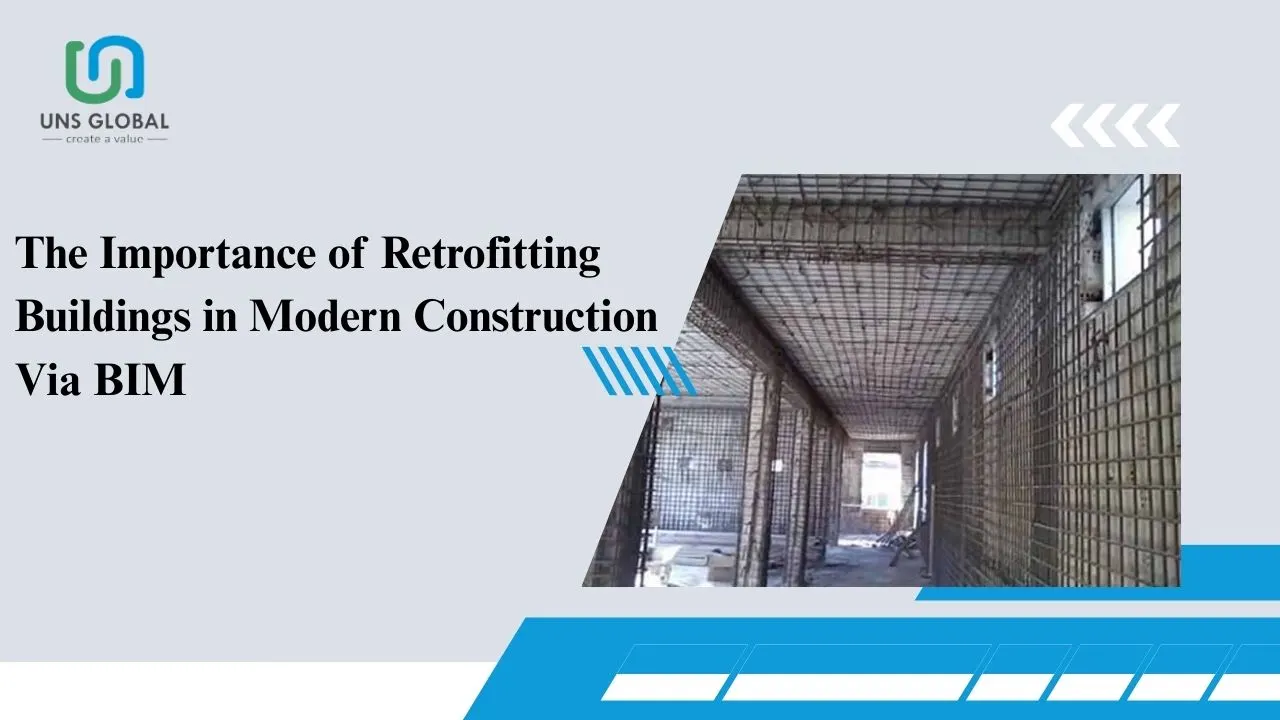
UNS Global stands at the forefront of innovation by embracing advanced technologies that enhance the safety, efficiency, and sustainability of the built environment. One such transformative approach is the use of Building Information Modeling (BIM) in retrofitting projects. The importance of retrofitting buildings in modern construction via BIM has grown significantly as cities expand, structures age, and sustainability becomes a top priority.
The retrofitting of buildings refers to the process of adding new systems, technologies, or structural improvements to existing buildings to enhance performance, safety, and functionality. Unlike new construction, retrofitting focuses on improving what already exists. This approach is especially valuable in urban areas where demolishing and rebuilding is costly, time-consuming, and environmentally damaging.
What Is BIM and Why It Matters in Retrofitting
Building Information Modeling is a digital representation of a building’s physical and functional characteristics. In the context of building retrofitting, BIM serves as a central platform where all stakeholders can visualize, analyze, and plan retrofitting work before execution.
By using BIM, teams can:
- Identify structural weaknesses
- Analyze energy performance
- Simulate design changes
- Detect clashes between systems
- Reduce errors and rework
UNS Global leverages BIM to offer smarter retrofitting solutions that align with modern construction demands.
Also Read : Types of Water Treatment Plants: What You Need to Know
How BIM Enhances Retrofitting Work
- Accurate Assessment of Existing Structures: One of the biggest challenges in retrofitting work is understanding the actual condition of the building. BIM integrates data from site surveys, laser scanning, and existing drawings to create an accurate digital model. This allows engineers to make informed decisions based on real conditions rather than assumptions.
- Improved Design Coordination: In building retrofitting projects, multiple systems—structural, mechanical, electrical, and plumbing—must work together. BIM enables seamless coordination between disciplines, reducing conflicts and ensuring that retrofitting solutions fit perfectly within the existing structure.
- Cost and Time Efficiency: BIM helps simulate different retrofitting scenarios, allowing teams to evaluate costs and timelines before construction begins. This level of foresight significantly reduces unexpected expenses and delays. UNS Global uses BIM to offer and provide cost-effective retrofitting strategies tailored to client needs.
- Enhanced Sustainability and Energy Performance: Sustainability is a major driver of modern retrofitting in construction. BIM allows energy analysis and performance simulations, helping designers optimize insulation, lighting, ventilation, and renewable energy integration. This results in lower operational costs and reduced environmental impact.
Applications of BIM in Building Retrofitting
BIM-supported retrofitting buildings projects are widely applied across various sectors:
- Commercial Buildings: Office retrofits for energy efficiency and modern workspaces
- Residential Complexes: Structural upgrades and utility improvements
- Industrial Facilities: Machinery layout optimization and safety enhancements
- Heritage Structures: Preserving historical value while upgrading functionality
BIM ensures that retrofitting work respects the existing structure while introducing modern improvements.
Why Choose UNS Global for BIM-Based Retrofitting
UNS Global brings together technical expertise, advanced BIM capabilities, and a deep understanding of modern construction practices. Our approach to the retrofitting of building projects focuses on precision, sustainability, and long-term value. By using BIM technology, we offer solutions that improve building performance while minimizing downtime and disruption.
The importance of retrofitting buildings in modern construction via BIM cannot be overstated. From improving safety and energy efficiency to reducing costs and extending building life, BIM transforms the way retrofitting work is planned and executed. UNS Global, organizations can confidently embrace building retrofitting solutions that meet today’s standards while preparing for tomorrow’s challenges.