
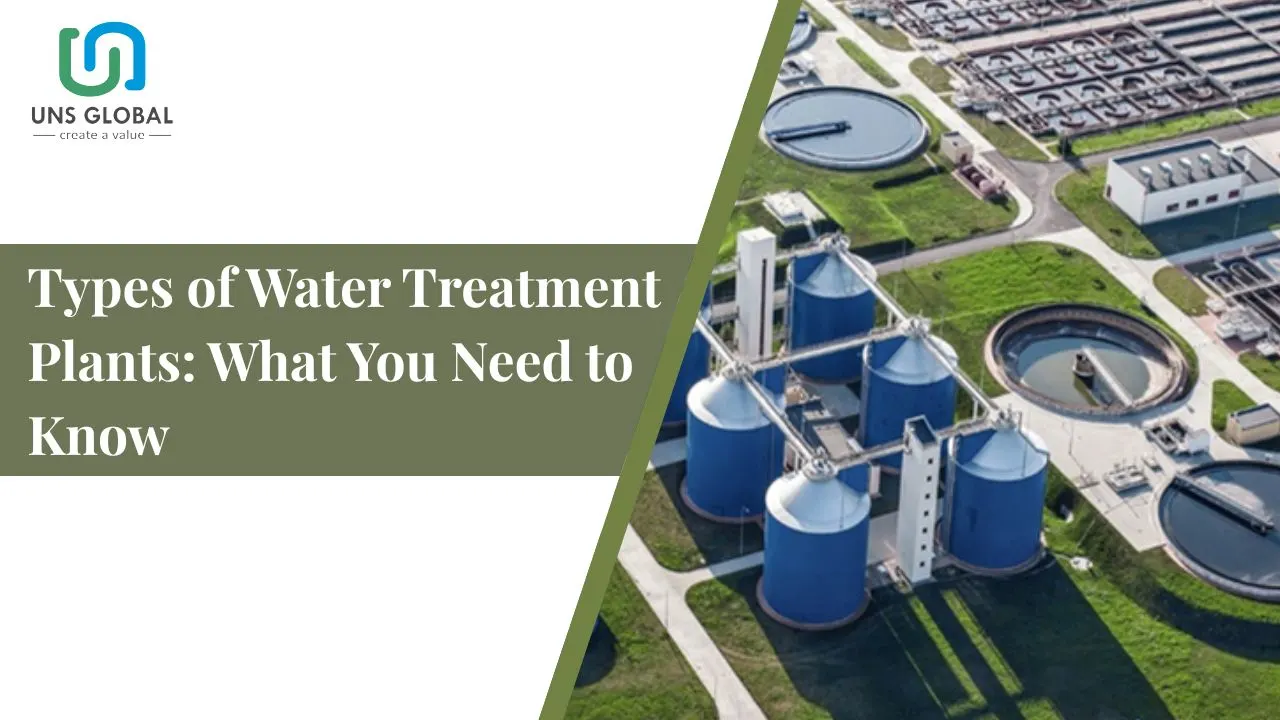
UNS Global is a trusted name in the field of water and wastewater management, we deliver reliable and sustainable solutions to meet modern water challenges. Our company consistently offers advanced systems that help industries, municipalities, and communities treat water efficiently and responsibly. With increasing water scarcity and rising pollution levels, understanding the types of water treatment plant available today is essential for choosing the right solution.
What is Water Treatment Plant ?
A water treatment plant is a facility that treats raw water by removing physical, chemical, and biological impurities. The treatment process may include screening, sedimentation, filtration, and disinfection, depending on the intended use of the water. A well-designed water treatment plant ensures safe water supply, protects public health, and supports sustainable development.
Types of Water Treatment Plant
- Conventional Water Treatment Plant: One of the most widely used systems is the conventional water treatment plant. This type of plant is commonly used for municipal drinking water supply. It follows a well-established treatment process that includes coagulation, flocculation, sedimentation, filtration, and disinfection.
- Package Water Treatment Plants: Package plants are compact, factory-built units designed for quick installation and operation. These treatment plants are ideal for small communities, residential complexes, hotels, and remote locations.
- Reverse Osmosis (RO) Water Treatment Plants: Reverse osmosis plants are advanced systems used to remove dissolved salts, minerals, and contaminants from water. RO systems are widely used in industries such as pharmaceuticals, food processing, and electronics, where high-purity water is required.
- Effluent Treatment Plants (ETP): Effluent Treatment Plants are designed to treat industrial wastewater before it is discharged into the environment or reused. These treatment plants remove chemicals, oils, heavy metals, and organic pollutants generated during manufacturing processes.
- Sewage Treatment Plants (STP): Sewage Treatment Plants treat domestic wastewater from homes, offices, and commercial buildings. These plants remove organic matter, suspended solids, and harmful bacteria from sewage water.
Also Read : 10 Swimming Pool Accessories You Must Have
Importance of Water Treatment Plant
A water treatment plant plays a critical role in ensuring the availability of clean, safe, and usable water for different applications. Whether for domestic use, industrial processes, or environmental protection, treatment plants support sustainable water management in several important ways.
- Ensures Safe Drinking Water: One of the primary purposes of a water treatment plant is to remove harmful bacteria, viruses, and contaminants from raw water. This helps protect public health and prevents the spread of waterborne diseases.
- Protects the Environment: Treatment plants reduce pollution by treating wastewater before it is discharged into rivers, lakes, or soil. This helps preserve natural ecosystems and prevents long-term environmental damage.
- Supports Industrial Operations: Industries require water of specific quality for manufacturing, cooling, and cleaning processes. A properly designed water treatment plant ensures consistent water quality, improving production efficiency and equipment life.
- Promotes Water Reuse and Conservation: Treated water can be reused for gardening, cooling towers, flushing, and other non-potable applications. This reduces freshwater consumption and supports sustainable water use practices.
- Prevents Equipment Damage: Untreated water often contains minerals, solids, and chemicals that can damage pipelines, boilers, and machinery. Treatment plants help remove these impurities, reducing maintenance costs and downtime.
Choosing the Right Water Treatment Plant
Selecting the right water treatment plant depends on several factors, including source water quality, required output quality, capacity, and application. Whether it is a conventional water treatment plant for drinking water or specialized treatment plants for industrial use, proper design and technology selection are key. UNS Global works closely with clients to understand their needs and offer tailored solutions that ensure long-term efficiency and compliance with standards.
Understanding the different types of water treatment plants helps individuals, industries, and authorities make informed decisions about water management. From conventional water treatment plants to advanced RO systems and industrial effluent treatment plants, each system serves a specific purpose. With its technical expertise, customer-focused approach, and commitment to quality, UNS Global continues to support sustainable water solutions by designing systems that deliver safe, clean, and reliable water for diverse applications.