UNS Global is committed to delivering sustainable and efficient wastewater management solutions that support cleaner environments and healthier communities. We provide advanced sewage treatment solutions that ensure effective wastewater treatment with long-term reliability. A sewage treatment plant plays a vital role in managing wastewater responsibly by treating sewage before it is discharged back into the environment or reused for non-potable purposes.
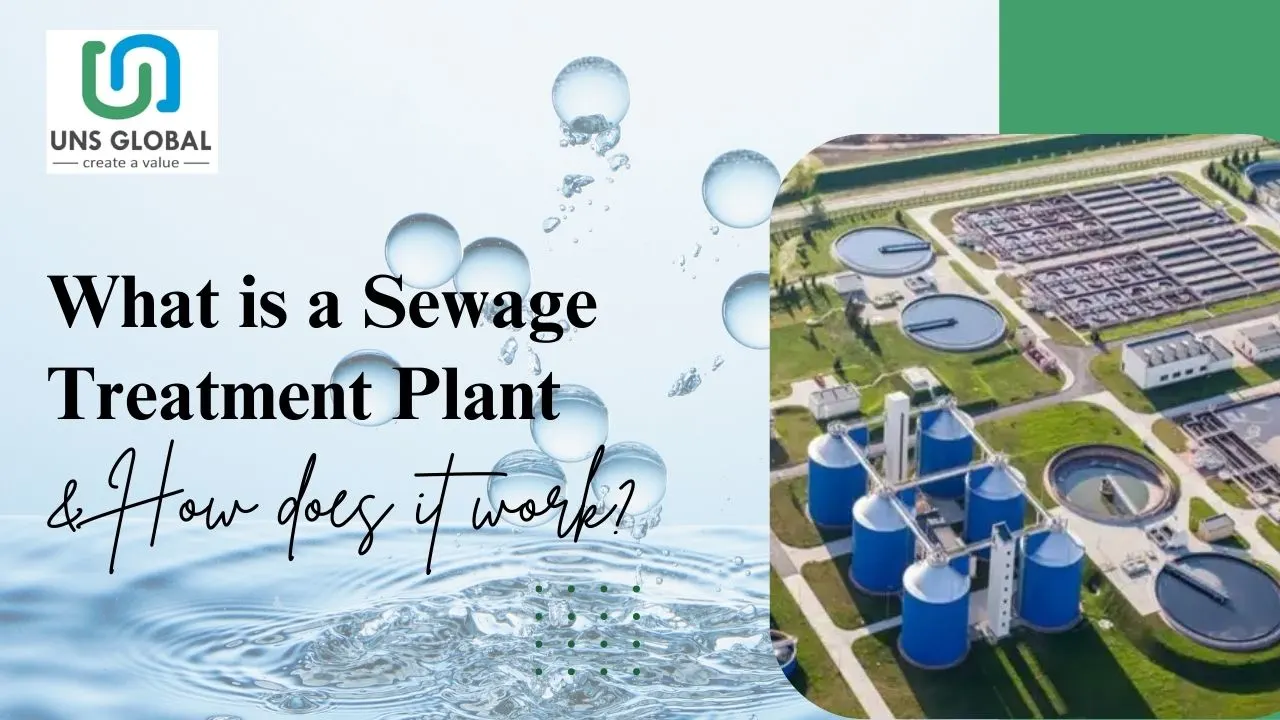
A sewage treatment plant, commonly known as an STP plant, is a facility designed to treat domestic and industrial wastewater. The main objective of a sewage treatment plant is to remove contaminants, organic matter, and harmful microorganisms from sewage so that the treated water is safe for disposal or reuse. Modern STP plants are designed to meet strict environmental regulations while minimizing operational costs and environmental impact.
Why Sewage Treatment Is Important
Untreated sewage can contaminate rivers, lakes, and groundwater, leading to waterborne diseases and environmental damage. A properly designed sewage treatment plant helps protect public health, conserve water resources, and support sustainable development. Treated water from an STP plant can often be reused for gardening, flushing, cooling towers, or industrial processes, reducing dependence on fresh water sources.
Sewage Treatment Plant Process
The sewage treatment plant process typically consists of the following main stages:
- Preliminary Treatment: In this first stage, large solids such as plastics, rags, and debris are removed using screens and grit chambers. This step protects downstream equipment from damage and ensures smooth plant operation.
- Primary Treatment: During primary treatment, sewage is allowed to settle in primary clarifiers. Heavier solids settle at the bottom as sludge, while lighter materials float to the surface and are skimmed off. This process removes a significant portion of suspended solids and organic matter.
- Secondary (Biological) Treatment: Secondary treatment is the core of the sewage treatment plant process. In this stage, microorganisms break down organic pollutants present in the wastewater. Common biological treatment methods include activated sludge process, moving bed biofilm reactor (MBBR), and sequencing batch reactor (SBR).
- Secondary Clarification: After biological treatment, the wastewater flows into secondary clarifiers where biological sludge settles. Part of this sludge is recycled back into the system to maintain microbial activity, while excess sludge is removed for further treatment.
- Tertiary Treatment: Tertiary treatment improves the quality of treated water by removing remaining impurities such as nutrients, fine particles, and pathogens.
Also Read : Swimming Pool Construction for Homes: A Complete Guide
Types of STP Plants
There are different types of STP plants available depending on capacity, space availability, and treatment requirements. These include:
- Activated Sludge Process (ASP)
- Moving Bed Biofilm Reactor (MBBR)
- Sequencing Batch Reactor (SBR)
- Membrane Bioreactor (MBR)
Each system has its advantages, and UNS Global offers customized sewage treatment plant solutions based on client needs and site conditions.
Understanding what a sewage treatment plant is and how it works highlights its importance in modern infrastructure. The sewage treatment plant process ensures that wastewater is treated responsibly, protecting both the environment and public health. With increasing water stress and stricter regulations, installing a reliable STP plant is no longer optional—it is essential. UNS Global continues to lead the way as we offer efficient, sustainable, and cost-effective sewage treatment plant solutions that support cleaner water and a greener future.