
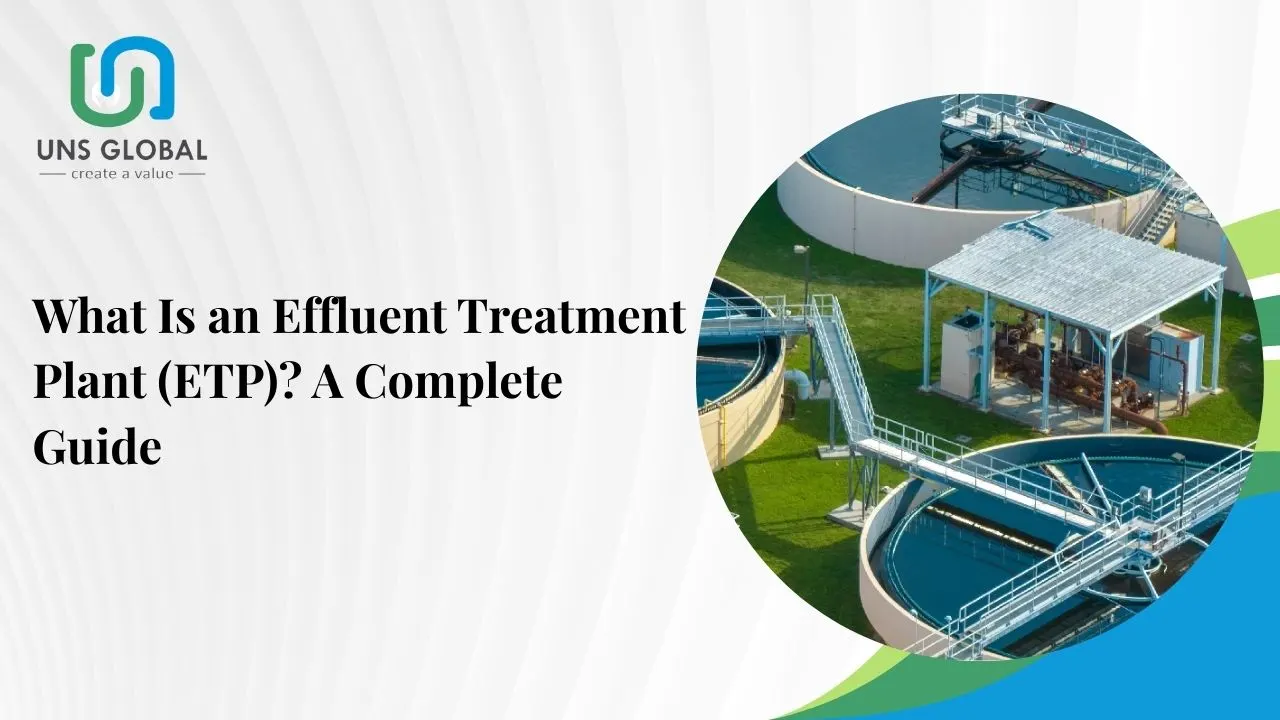
UNS Global understands that responsible wastewater management is essential for industries operating in today’s environmentally conscious world. One of the most effective solutions for managing industrial wastewater is an Effluent Treatment Plant (ETP). We provide solutions that balance environmental responsibility with operational efficiency. UNS Global works with advanced engineering standards to offer durable ETP tanks that ensure long service life and reliable performance under demanding industrial conditions.
Effluent Treatment Plant (ETP)
An Effluent Treatment Plant is a system designed to treat wastewater generated by industrial processes before it is discharged into the environment or reused. Industrial effluent often contains chemicals, oils, heavy metals, organic matter, and other pollutants that cannot be released untreated. An ETP plant removes these contaminants through a combination of physical, chemical, and biological processes, ensuring safe disposal or reuse of water.
Industries such as textiles, pharmaceuticals, chemicals, food processing, power plants, and manufacturing units rely heavily on effluent treatment to comply with pollution control norms.
ETP Plant Process Explained Step by Step
The ETP plant process typically follows a structured sequence to achieve effective treatment:
1. Preliminary Treatment
Wastewater passes through screens and grit chambers to remove large solids, debris, and floating matter that could damage equipment.
2. Equalization
In the equalization tank, wastewater flow and pollutant concentration are stabilized. This step ensures uniform treatment and prevents shock loads on the system.
3. Chemical Treatment
Chemicals are added in the ETP tank to neutralize pH and remove suspended solids, oils, and heavy metals through coagulation and flocculation.
4. Biological Treatment
Microorganisms break down organic pollutants in the biological treatment tank. This is a crucial stage of effluent treatment, significantly reducing BOD and COD levels.
5. Clarification
Treated water flows into clarifiers where sludge settles at the bottom, separating clean water from solid waste.
6. Tertiary Treatment (Optional)
Advanced filtration or disinfection processes further polish the treated water for reuse or safe discharge.
Also Read : Rooftop Swimming Pool: Design, Benefits, Safety & Installation Guide
Main Components of an ETP Plant
An ETP plant consists of several key components that work together to treat wastewater efficiently:
- Collection and Equalization Units to balance flow and pollutant load
- ETP tank systems for chemical and biological treatment
- Clarifiers and Filters to separate solids from treated water
- Sludge Handling Units for safe disposal of waste solids
Each ETP tank plays a specific role in ensuring wastewater is treated thoroughly and consistently.
Importance of Effluent Treatment
- Protection of Natural Water Resources: Effluent treatment plays a crucial role in protecting rivers, lakes, groundwater, and oceans from industrial pollution. Untreated effluents often contain toxic chemicals, heavy metals, oils, and organic waste that can severely damage aquatic ecosystems.
- Compliance With Environmental Regulation: Governments and pollution control authorities enforce strict discharge standards for industrial wastewater. Effluent treatment helps industries comply with these legal requirements by reducing pollutant levels such as BOD, COD, suspended solids, and toxic substances.
- Protection of Public Health: Untreated industrial effluent can contaminate drinking water sources and agricultural land, posing serious health risks to humans and animals.
- Conservation of Freshwater Resources: Effluent treatment enables industries to reuse treated wastewater for non-potable applications such as cooling, washing, and irrigation. This reduces dependence on freshwater sources, which are increasingly scarce.
- Reduction of Environmental Pollution: Effluent treatment significantly reduces air, soil, and water pollution by controlling the release of contaminants into the environment.
Industrial Applications of ETP Plants
ETP plants are widely used across industries, including:
- Textile and dyeing units
- Pharmaceutical and chemical industries
- Food and beverage processing plants
- Pulp and paper mills
- Power generation facilities
Each industry requires a customized ETP plant process based on wastewater characteristics, which UNS Global carefully evaluates before system design.
How UNS Global Adds Value
UNS Global brings technical expertise, practical insight, and customer-focused solutions to effluent treatment projects. The company does more than install systems—it partners with industries to design solutions that work long-term.
From system planning to execution, UNS Global continues to offer customized effluent treatment plant solutions that meet regulatory requirements and operational goals. Our approach focuses on efficiency, durability, and ease of maintenance.
An Effluent Treatment Plant (ETP) is a vital component of responsible industrial wastewater management. From protecting the environment to enabling water reuse and regulatory compliance, the role of an ETP plant is indispensable. With its commitment to quality and innovation, UNS Global continues to offer reliable effluent treatment plant solutions, robust ETP tank systems, and efficient ETP plant process designs that help industries operate sustainably and responsibly in a rapidly evolving environmental landscape.