UNS Global is a trusted name in wastewater treatment solutions, offering advanced Sewage Treatment Plants designed to meet residential, commercial, industrial, and institutional needs. Our innovative systems help businesses and communities manage wastewater efficiently while protecting natural water resources. A Sewage Treatment Plant (STP) plays a crucial role in treating wastewater before it is discharged into the environment or reused for various applications.
What is a Sewage Treatment Plant?
A Sewage Treatment Plant (STP) is a system designed to remove contaminants, organic matter, harmful bacteria, suspended solids, and pollutants from wastewater. The treatment process converts sewage into cleaner water that can either be safely discharged into water bodies or reused for non-potable applications such as gardening, flushing, cooling towers, and landscaping.
By treating wastewater effectively, an STP helps reduce environmental pollution and supports sustainable water management.
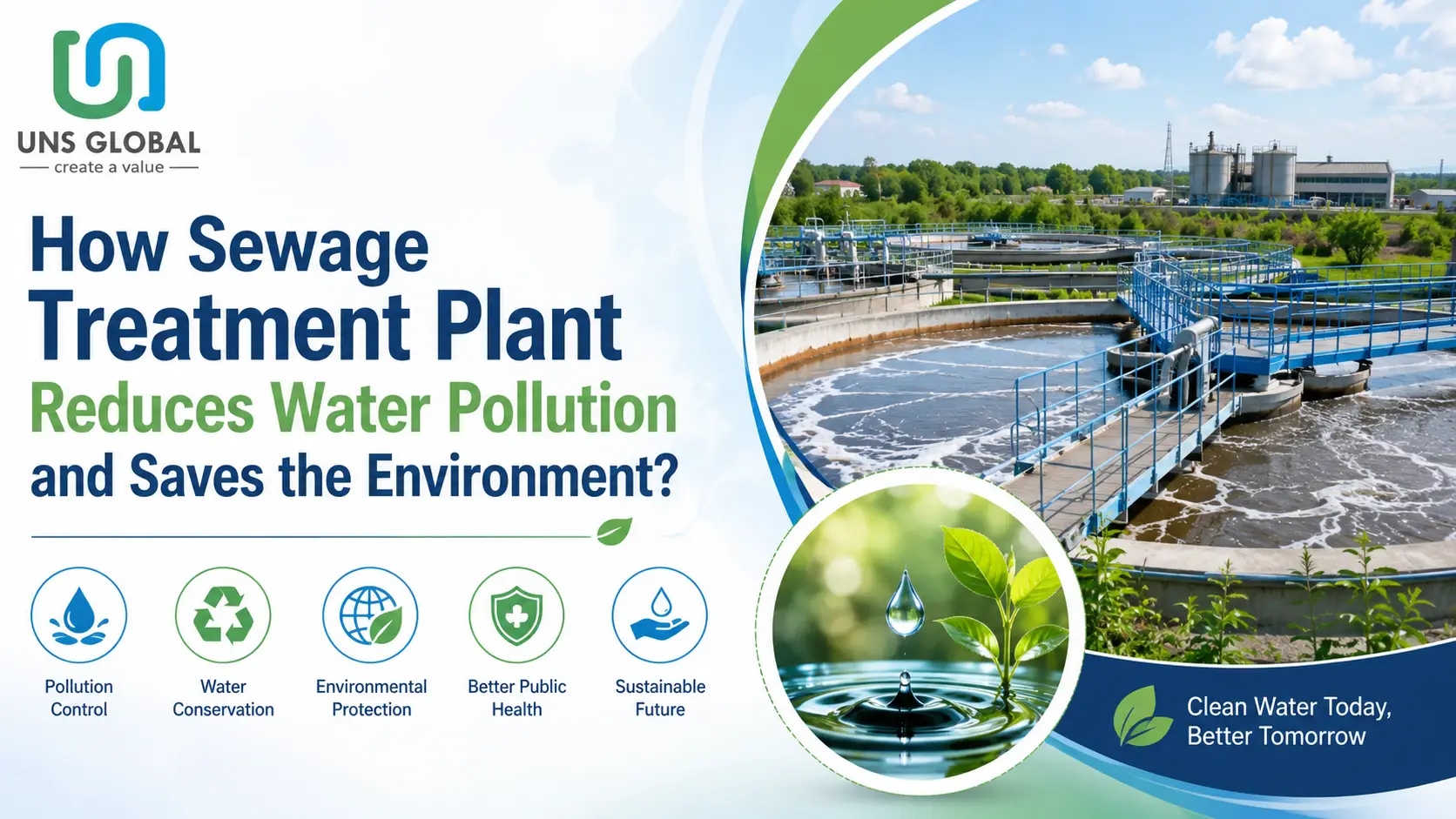
How Does a Sewage Treatment Plant Reduce Water Pollution?
One of the biggest environmental challenges today is the discharge of untreated sewage into rivers, lakes, ponds, and groundwater. This untreated wastewater contains harmful bacteria, chemicals, organic waste, and nutrients that pollute natural water sources and harm aquatic ecosystems.
A modern Sewage Treatment Plant reduces water pollution through several treatment stages.
1. Removal of Solid Waste
The treatment process begins by removing large solid materials such as plastic, paper, leaves, and debris using screening equipment. This prevents damage to downstream equipment and improves treatment efficiency.
2. Separation of Suspended Particles
Sedimentation tanks allow heavier particles to settle at the bottom while lighter materials float to the surface. These impurities are removed before biological treatment begins.
3. Biological Treatment
Microorganisms naturally break down organic waste present in sewage. This process significantly reduces Biological Oxygen Demand (BOD) and Chemical Oxygen Demand (COD), producing cleaner water that is much safer for the environment.
4. Filtration Process
Advanced filtration systems remove fine suspended particles, ensuring higher water clarity and improved water quality.
5. Disinfection
The treated water is disinfected using ultraviolet (UV) systems, ozone, or chlorination to eliminate harmful bacteria, viruses, and pathogens before discharge or reuse.
Through these treatment stages, an STP prevents harmful pollutants from entering natural water bodies and protects ecosystems.
Benefits of Sewage Treatment Plant
There are numerous benefits of sewage treatment plant systems for industries, commercial buildings, residential societies, educational institutions, hospitals, and municipalities.
Some of the major benefits of sewage treatment plant include:
- Reduces water pollution
- Conserves freshwater resources
- Protects rivers and lakes
- Supports water recycling
- Improves public health
- Reduces environmental contamination
- Minimizes groundwater pollution
- Helps comply with environmental regulations
- Reduces water procurement costs
- Promotes sustainable development
These advantages make Sewage Treatment Plants an essential part of modern infrastructure.
Sewage Treatment Plant Benefits for the Environment
The environmental impact of wastewater treatment is significant. Some important sewage treatment plant benefits include protecting aquatic life, conserving water, and reducing pollution levels.
Conserves Freshwater Resources
Freshwater availability is becoming increasingly limited. Treated wastewater can be reused for irrigation, gardening, cooling systems, flushing, and industrial processes, reducing dependence on freshwater supplies.
Prevents River Pollution
Untreated sewage pollutes rivers, lakes, and streams, causing oxygen depletion and harming aquatic organisms. STPs remove contaminants before water is released into the environment.
Protects Groundwater
Proper wastewater treatment prevents harmful chemicals and bacteria from seeping into underground water sources, preserving groundwater quality for future generations.
Supports Sustainable Water Management
Water recycling through sewage treatment reduces overall water consumption and contributes to long-term environmental sustainability.
These sewage treatment plant benefits make STPs an environmentally responsible investment.
Features of a Sewage Treatment Plant
Today’s advanced Sewage Treatment Plants are designed for maximum efficiency, automation, and environmental performance.
Key features include:
- Compact design
- Energy-efficient operation
- Automatic controls
- Low maintenance
- High treatment efficiency
- Odor control systems
- Durable construction
These features ensure dependable operation while minimizing maintenance requirements.
A Sewage Treatment Plant effectively removes harmful pollutants, protects natural water resources, and enables water recycling for various applications. The numerous benefits of sewage treatment plant systems include cleaner water, improved public health, reduced environmental impact, and sustainable water management. These valuable sewage treatment plant benefits make STPs an essential investment for residential, commercial, and industrial projects.
If you are looking for reliable wastewater treatment solutions, UNS Global can offer advanced Sewage Treatment Plants that combine efficiency, durability, and environmental responsibility. Their innovative systems help organizations reduce water pollution, conserve valuable resources, and contribute to a cleaner and more sustainable future.