UNS Global is a trusted name in the industry, offering advanced water treatment plant solutions that are engineered to meet diverse customer requirements. We offer innovative systems that deliver reliable performance, energy efficiency, and long-term value for residential, commercial, and industrial applications. Whether it is used for drinking, manufacturing, agriculture, or industrial processes, effective water treatment plays a vital role in protecting health, conserving resources, and supporting sustainable development.
What Is Water Treatment Plant (What Is WTP?)
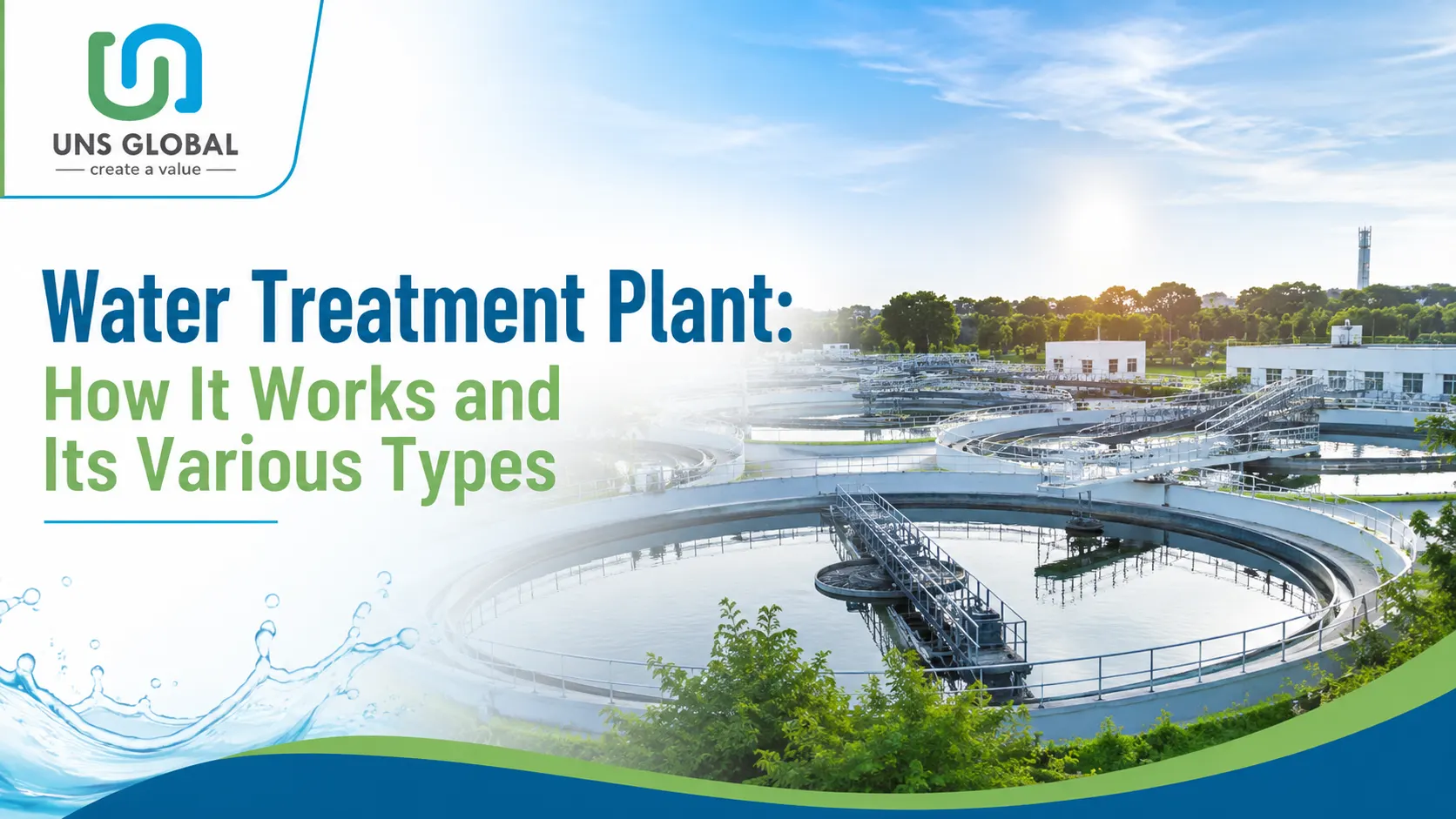
A water treatment plant is a facility or system that treats raw water by removing suspended solids, bacteria, viruses, dissolved salts, harmful chemicals, and other impurities. The treated water becomes safe for its intended use, whether for drinking, industrial production, irrigation, or commercial purposes.
A modern wtp plant uses multiple treatment processes to improve water quality while ensuring compliance with environmental and health standards. Depending on the source of water and its contamination level, different treatment technologies may be incorporated into the system.
How Does a Water Treatment Plant Work?
The operation of a water treatment plant involves several carefully designed stages. Each stage removes different types of contaminants to produce purified water.
1. Raw Water Collection
The process begins by collecting water from natural sources such as rivers, lakes, borewells, reservoirs, or municipal supplies. The quality of the source water determines the type of water treatment required.
2. Screening
Large debris like leaves, sticks, plastic, and other floating materials are removed using screening equipment. This protects pumps and downstream treatment equipment from damage.
3. Coagulation and Flocculation
Special chemicals called coagulants are added to the water to bind tiny suspended particles together. These particles form larger clusters called flocs, making them easier to remove in the next stage.
4. Sedimentation
The water is transferred to sedimentation tanks where the heavier flocs settle at the bottom. This significantly reduces suspended solids before filtration.
5. Filtration
The partially treated water passes through multiple filtration media such as sand, activated carbon, multimedia filters, or membrane systems. Filtration removes fine particles, organic matter, and many harmful contaminants.
6. Disinfection
Disinfection eliminates bacteria, viruses, and other harmful microorganisms. Chlorination, ultraviolet (UV) treatment, or ozone treatment are commonly used methods in water treatment systems.
Types of Water Treatment Plant
Different industries and applications require different types of wtp plant systems. Some of the most common types include:
Conventional Water Treatment Plant
This type combines coagulation, sedimentation, filtration, and disinfection to produce safe and clean water for general use.
Reverse Osmosis (RO) Water Treatment Plant
RO-based systems use semi-permeable membranes to remove dissolved salts, heavy metals, and impurities, producing highly purified water.
Demineralization (DM) Plant
DM plants remove dissolved minerals and ions from water, making them ideal for boilers, laboratories, and pharmaceutical industries.
Softening Plant
Water softening systems remove calcium and magnesium, preventing scale formation in pipelines and industrial equipment.
Ultrafiltration (UF) Plant
UF systems use membranes to remove bacteria, suspended solids, and fine particles while preserving beneficial minerals.
Industrial Water Treatment Plant
Industrial systems are specially designed to handle large water volumes and meet the unique requirements of manufacturing processes.
Each wtp plant is selected based on water quality, treatment objectives, and application requirements.
Benefits of a Water Treatment Plant
Installing a high-quality water treatment plant provides numerous advantages for industries and businesses.
Some key benefits include:
- Produces clean and safe water
- Removes harmful contaminants
- Improves taste and odor
- Protects industrial equipment from scaling
- Reduces maintenance costs
- Increases equipment lifespan
- Supports environmental compliance
These advantages make a wtp plant a valuable investment for organizations seeking reliable water management solutions.
Future of Water Treatment
With increasing water scarcity and growing environmental concerns, advanced water treatment technologies are becoming more important than ever. Smart automation, IoT-based monitoring, membrane filtration, energy-efficient equipment, and water recycling technologies are transforming the industry.
A modern water treatment plant is an essential investment for ensuring clean, safe, and reliable water for residential, commercial, and industrial applications. By removing impurities, microorganisms, and harmful chemicals, effective water treatment improves water quality, protects equipment, enhances operational efficiency, and supports environmental sustainability.
UNS Global is committed to delivering advanced water treatment plant solutions that combine innovative technology, superior engineering, and dependable performance. We offer customized systems tailored to specific water quality requirements, helping customers achieve efficient operations, regulatory compliance, and long-term value.